 CULTURETECHLENS
The Encyclopedia · CTL-ENC-000292
Mary Eliza Mahoney
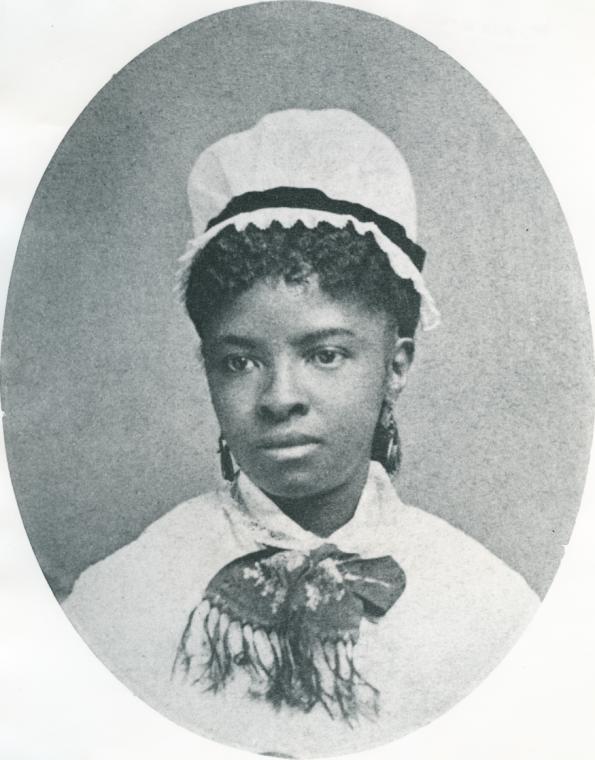
First Black professionally trained nurse in the United States, who graduated from the New England Hospital for Women and Children in 1879 and co-founded the National Association of Colored Graduate Nurses in 1908.
| At a glance | |
|---|---|
| Type | PERSON — nurse |
| Dates | May 7, 1845 – January 4, 1926 (birth date disputed — see Disputed and unresolved) |
| Chicago connection | SIGNIFICANT — national significance; no Chicago practice documented in the sources consulted |
| Known for | First African American to graduate from an American school of nursing (1879); co-founder of the NACGN (1908) |
| Verification | VERIFIED |
| CTL ID | CTL-ENC-000292 |
| Documented address | None documented in the sources consulted |
Overview
Mary Eliza Mahoney was the first African American to study and work as a professionally trained nurse in the United States. She graduated in 1879 from the nursing program of the New England Hospital for Women and Children in Boston — among the very first formal nurse-training programs in the country — as the only Black graduate of a class in which only a handful of the more than forty entrants completed the rigorous sixteen-month course [S1][S2]. Her graduation is the founding fact of Black professional nursing in America: before Mahoney, Black women nursed extensively but were barred from the credentialed training that made nursing a profession.
Early life and the road to training
Mahoney was born in Dorchester, Boston, Massachusetts, the eldest of three children of parents who had moved north from North Carolina before the Civil War seeking a less discriminatory environment; she attended Boston's Phillips School, one of the city's early integrated schools [S2]. As a young woman she went to work at the New England Hospital for Women and Children — a hospital staffed by women physicians — and stayed for some fifteen years, working as a janitor, cook, laundress, and nurse's aide before the hospital admitted her to its graduate nursing program in 1878, when she was in her thirties [S1][S2]. The program's demands were severe: sixteen-hour ward days with responsibility for multiple patients, alternating with full days of lectures. Of the forty-odd students who began, only three or four finished; Mahoney was one of them, receiving her diploma on August 1, 1879 [S2].
A career in private nursing
After graduation Mahoney registered with the Nurses' Directory at the Massachusetts Medical Library and built a forty-year career in private-duty nursing, working for prominent families along the Eastern Seaboard and earning a reputation for proficiency and quiet professionalism that, contemporaries and later historians agree, raised the standing of nurses generally and of Black nurses in particular [S2][S3]. She chose private practice in significant part because public and institutional nursing were closed or hostile to Black nurses. From 1911 to 1912 she also served as director of the Howard Orphan Asylum for Black children in Kings Park, Long Island [S3].
Building the profession: the NACGN
In 1896 Mahoney joined the predominantly white Nurses Associated Alumnae of the United States and Canada and found Black nurses unwelcome there. In 1908 she joined Martha Minerva Franklin and Adah B. Thoms in founding the National Association of Colored Graduate Nurses (NACGN), organized to advance standards for trained nurses, break down discrimination in the profession, and develop leadership among Black nurses [S1][S3]. Mahoney served the association as chaplain and lifetime member, and in 1909 delivered its first convention's keynote address. The NACGN's long campaign ended in its own success: after the American Nurses Association integrated in 1948, the NACGN dissolved into it in 1951. Mahoney's name now marks the profession's conscience — the American Nurses Association's biennial Mary Eliza Mahoney Award honors significant contributions to advancing equal opportunity in nursing, and she was inducted into the ANA Hall of Fame in 1976 and the National Women's Hall of Fame in 1993 [S3]. She died in Boston on January 4, 1926, having registered to vote in 1920 among the first Boston women to do so after suffrage [S3].
Connection
Mahoney's significance is national: her 1879 graduation and her institution-building opened the credentialed nursing profession to Black women across the United States. No Chicago practice is documented in the sources consulted; her Chicago connection is the profession she helped open — including the Black nurses trained at Chicago's Provident Hospital school from 1891 onward, who worked in the organizational world the NACGN built.
Documented address and map
No address documented in the sources consulted — no coordinates are recorded and no map is published for this entry.
Disputed and unresolved
| Claim | Version A (source) | Version B (source) | CTL position |
|---|---|---|---|
| Birth date | May 7, 1845 (S2, S3) | April 16, 1845 (some secondary accounts) | DISPUTED — both dates circulate; this entry carries May 7 in the date fields and records the conflict here |
See also
Relationships
- affiliated_with — New England Hospital for Women and Children — Mahoney worked at the hospital for some fifteen years and graduated from its nursing program on August 1, 1879 (S1, S2).
- founded — National Association of Colored Graduate Nurses — Mahoney co-founded the NACGN in 1908 with Martha Minerva Franklin and Adah B. Thoms (S3).
- related_to — Adah Belle Thoms — Mahoney and Thoms worked together in founding the NACGN, the national organization of Black graduate nurses (S3).
Sources
- S1: National Women's History Museum. "Mary Eliza Mahoney." National Women's History Museum biography. https://www.womenshistory.org/education-resources/biographies/mary-eliza-mahoney
- S2: "Mahoney, Mary Eliza (1845–1926)." BlackPast.org. https://blackpast.org/african-american-history/mahoney-mary-eliza-1845-1926/
- S3: "Mary Eliza Mahoney." Wikipedia. https://en.wikipedia.org/wiki/Mary_Eliza_Mahoney
Cite this entry
- Permanent ID: CTL-ENC-000292 · Version: 0.1 · Date: 2026-10-29
- Chicago: CultureTechLens. "Mary Eliza Mahoney." CultureTechLens Encyclopedia, Black Medicine (staged), version 0.1, October 29, 2026. CultureTechLens NFP. CTL-ENC-000292. Source: CultureTechLens
- APA: CultureTechLens. (2026). Mary Eliza Mahoney (Version 0.1, Entry CTL-ENC-000292). CultureTechLens Encyclopedia. CultureTechLens NFP. Source: CultureTechLens
- MLA: CultureTechLens. "Mary Eliza Mahoney." CultureTechLens Encyclopedia, version 0.1, CultureTechLens NFP, 29 Oct. 2026. Entry CTL-ENC-000292. Source: CultureTechLens
Further reading
- National Women's Hall of Fame induction record for Mary Eliza Mahoney (1993).
Image credits
- Photographer unknown; public domain (PD-old), via Wikimedia Commons. Source: CultureTechLens
Citation
CultureTechLens. "Mary Eliza Mahoney." CultureTechLens Encyclopedia, Black Medicine (staged), version 0.1, 2026-10-29. CultureTechLens NFP. CTL-ENC-000292.
<!-- =======================