 CULTURETECHLENS
The Encyclopedia · CTL-ENC-000519
Jesse Binga
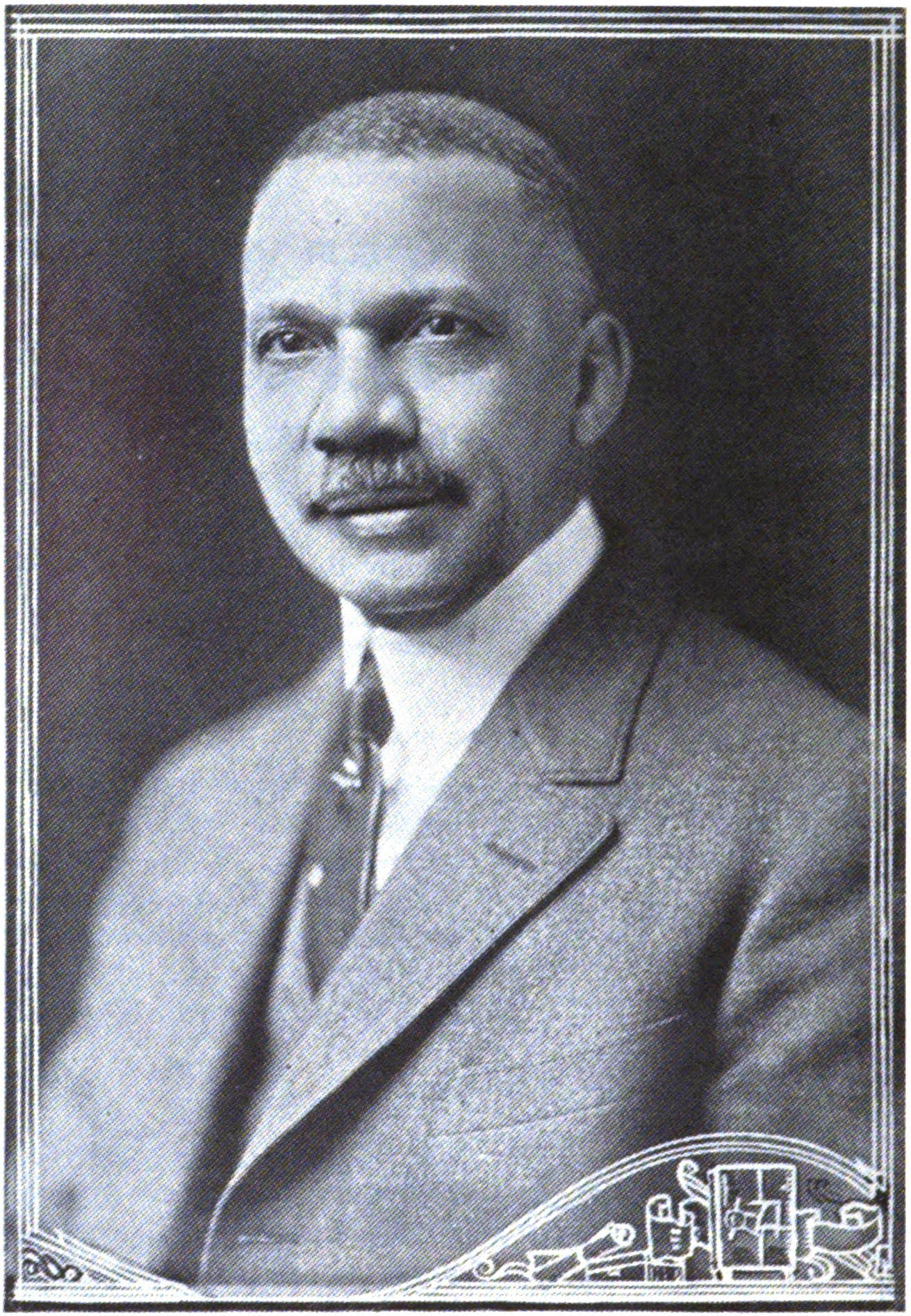
Chicago real-estate man who founded the first Black-owned bank in the North (Binga State Bank, 1921), saw it closed in June 1930, and was convicted in a prosecution Black Chicago called racial — pardoned 1941.
| Field | Value |
|---|---|
| Born | April 10, 1865, Detroit |
| Died | June 13, 1950, Chicago |
| Business | J. C. Binga & Co. (real estate); the Binga banks |
| Document of record | The Binga State Bank's record — charter (1921), growth, closure (1930), and the trials that followed |
| Chicago connection | CORE — a Chicago institution-builder from the 1890s to 1950 |
Overview
Jesse Binga arrived in Chicago in the 1890s — 1893 in the standard biographical account — and built a real-estate business, J. C. Binga & Co., on the South Side's growing Black demand for housing the white market would not supply fairly. In 1908 he opened a private bank — the first Black-owned bank in the North — and on January 3, 1921, having won a state charter, reopened it as the Binga State Bank at 35th and State, in the heart of Bronzeville. The charter was the point: a Black bank under the same state law as any other, taking Black Chicago's savings at scale. Opening deposits exceeded $200,000 against capital and surplus of $120,000; by 1924 deposits passed $1.3 million; in 1929 the bank moved into the Binga Arcade as its headquarters.[S1][S2]
The failure — accounts printed as contested
The bank did not survive the Depression's first year, and the accounts of why are contested; this entry prints them as contested, per the record. The bank's assets were concentrated in mortgages to Black churches and fraternal societies. Narrative sources sympathetic to Binga say he refused to foreclose on those borrowers — Black institutions he would not ruin — and that the Chicago Clearing House refused the bank assistance in the crisis. The state Auditor General closed the bank in June 1930. At closing, the average deposit was $66.12 and over eighty percent of accounts held under $100: this was a working people's bank, and its failure fell on them — a fact no account disputes. What the accounts dispute is culpability, and the dispute ran straight into a courtroom.[S1][S2]
Indictment, conviction, pardon
Binga was indicted for embezzlement in March 1931. His first trial, in 1932, hung; a second, in 1933, convicted — on an amount the sources report inconsistently ($22,000 in the BlackPast-derived summary against a $300,000 accusation in another account; both are tabled below). Sentenced to ten years, he was released after about three following community petitions — Clarence Darrow among his supporters — and fully pardoned in 1941. Black Chicago's verdict on the prosecution, widely recorded, was that it was racially tainted: the city's first Black banker made an example, where white bankers of the same collapse were not. This entry reports that contemporary verdict as the community's documented judgment, and the conviction as the court's — both records stand.[S1][S2]
The document of record
Binga's document of record is institutional: the bank itself — its 1921 charter, its deposit ledgers' growth, the 1930 closure, and the trial record. The graph holds the bank as CTL-E-1185 and a companion record for the Binga Bank archive (CTL-E-0786), whose research use is noted for the classification sitting.
Chicago connection
CORE. Binga's bank was a Bronzeville institution in the strictest sense: chartered there, fed by its wages, ruined in its churches' mortgages, defended by its petitions.
Documented address and map
The bank's 35th and State location is documented in the narrative record, but no address statement meeting this encyclopedia's geocoding standard was established from the sources consulted; this entry carries no coordinates and no map.
Disputed and unresolved
| Claim | Version A | Version B | CTL position |
|---|---|---|---|
| Why the bank failed | Binga refused to foreclose on Black churches and societies; the Clearing House refused aid (sympathetic narrative accounts) | Mismanagement and the embezzlement the state alleged (the prosecution's account) | Printed as contested; the closure's facts (June 1930; the small-deposit profile) are not in dispute, the culpability is |
| The embezzlement amount | $22,000 (BlackPast-derived summary) | $300,000 alleged (another account) | Both figures printed with their sources; neither asserted |
See also
- [[CTL-ENC-000520]] — S. B. Fuller (the next generation's Chicago business model)
- [[CTL-ENC-000521]] — Johnson Products Company (the empire built a generation later)
Relationships
- based_in — City of Chicago (CTL-E-1475) — Arrived in Chicago in the 1890s (1893 in the BlackPast-derived account) and built his real-estate and banking career there until his death in 1950.
- founded — Binga Bank (CTL-E-1185) — Founded his private bank in 1908 — the first Black-owned bank in the North — which won a state charter and opened as the Binga State Bank on January 3, 1921.
Sources
- S1: BlackPast-derived biography of Jesse Binga (via SamePassage). https://samepassage.org/jesse-binga/
- S2: "Jesse Binga." Wikipedia. https://en.wikipedia.org/wiki/Jesse_Binga · Prabook. https://prabook.com/web/jesse.binga/3760607
Cite this entry
Permanent ID: CTL-ENC-000519 · Crosswalked graph record: CTL-E-0088
Chicago: CultureTechLens. "Jesse Binga." CTL Encyclopedia, Historical Documents (staged), CTL-ENC-000519, version 0.1, 2026-10-29. APA: CultureTechLens. (2026). Jesse Binga (CTL-ENC-000519, v0.1) [Encyclopedia entry, Historical Documents (staged)]. CTL Encyclopedia. MLA: CultureTechLens. "Jesse Binga." CTL Encyclopedia, Historical Documents (staged), CTL-ENC-000519, version 0.1, 29 Oct. 2026.
Further reading
- The Binga Bank archive record (graph CTL-E-0786) for the bank's surviving paper.
Image credits
- Jesse Binga, 1923 — public domain, via Wikimedia Commons. Source: CultureTechLens.
CULTURETECHLENS · "Culture, Clearly Seen." · Black Cultural Intelligence Cite as: CultureTechLens, "Jesse Binga," CTL Encyclopedia, Historical Documents (staged), CTL-ENC-000519, 2026-10-29. Source: CultureTechLens