 CULTURETECHLENS
The Encyclopedia · CTL-ENC-000484
Harold Washington
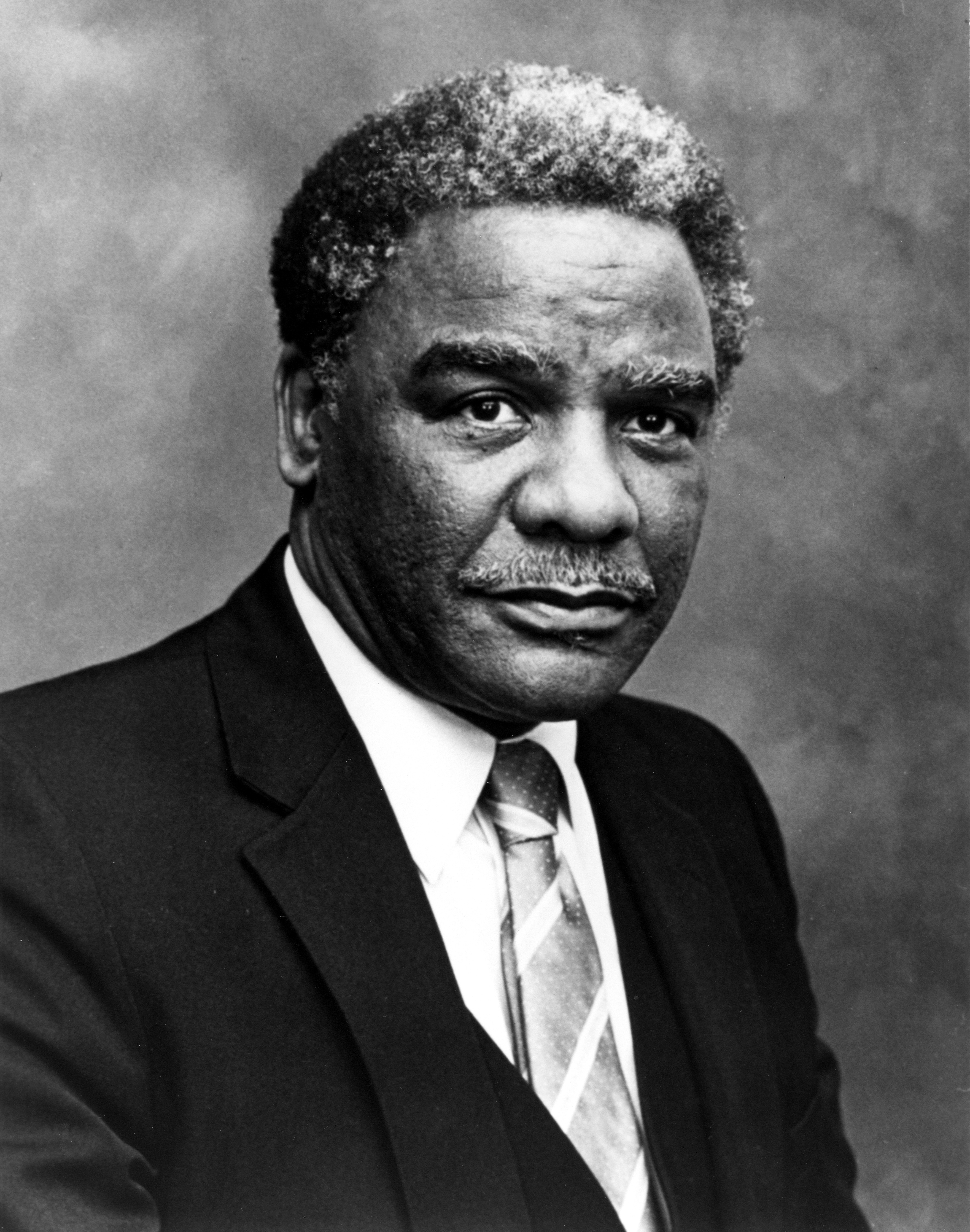
Chicago's first Black mayor (1983–1987), whose election capped a decade of Black political organizing, and whose mayoral papers — campaign and central files at the Chicago Public Library — document the administration in full.
| Field | Value |
|---|---|
| Born | April 15, 1922, Cook County Hospital, Chicago |
| Died | November 25, 1987, Chicago (in office) |
| Office | 51st mayor of Chicago, April 29, 1983 – November 25, 1987 |
| Earlier offices | Illinois House (1965–1976); Illinois Senate (1976–1980); U.S. House of Representatives, Illinois 1st District (1980–1983) |
| Document of record | Harold Washington Archives and Collections, Chicago Public Library — Mayoral Campaign Records and Mayoral Records, Central Files Records |
| Chicago connection | CORE — born, raised, elected, and documented in Chicago |
Overview
Harold Washington's election in 1983 is the central political document of modern Black Chicago — not a single text but an archive: the voter-registration drives, the primary and general election returns, and the great record series his administration deposited with the Chicago Public Library. This entry is anchored on that archive. The Mayoral Campaign Records (1966–1983, bulk 1982–1983) and the Mayoral Records, Central Files Records (1949–1987, bulk 1983–1987) together run to more than ninety linear feet of files, and they are the primary evidence through which Washington's rise, his reform administration, and the "Council Wars" that opposed it can be studied at first hand.[S1][S2]
Washington was born on April 15, 1922, at Cook County Hospital, the son of Roy Lee Washington and Bertha Jones Washington. He grew up on the South Side, attended DuSable High School from 1939, left for the Civilian Conservation Corps and then military service (1943–1946), and completed his DuSable diploma in 1946. He took a bachelor's degree at Roosevelt University and a law degree at Northwestern. That trajectory — South Side public schools, wartime service, Roosevelt and Northwestern — placed him inside the institutions that produced Chicago's postwar Black professional class, and his later career moved through them in sequence: the Illinois House (26th District, 1965–1976), the Illinois Senate (1976–1980), an unsuccessful 1977 run for mayor, and the U.S. Congress (1980–1983).[S3]
The road to 1983
Washington's mayoral candidacy was announced on November 10, 1982, at the Hyde Park Hilton, after a registration campaign that added large numbers of Black voters to the rolls. In the Democratic primary of February 22, 1983, he defeated incumbent mayor Jane Byrne and Richard M. Daley with 36.28 percent of the vote in a three-way race. In the general election of April 12, 1983, he defeated Republican Bernard Epton with 51.72 percent. He was inaugurated on April 29, 1983, at Navy Pier as Chicago's 51st mayor — and its first Black mayor.[S3]
The campaign records document how this was done: the finding aid for the Mayoral Campaign Records describes a collection spanning 1966–1983 with the bulk concentrated in 1982–1983 — the years of the draft-Washington movement, the registration drives, and the two elections. For researchers, the campaign series is the administrative paper trail of the coalition — labor, lakefront liberals, Latino voters, and the Black wards — that broke the Democratic machine's hold on the mayor's office.[S2]
The inauguration itself survives in the library's own telling: four thousand guests watched Washington sworn in at 2:53 p.m. on April 29, 1983, by Charles E. Freeman, a justice of the Illinois Appellate Court — and his inaugural hope, to be remembered as "the Mayor who cared about people and who was, above all, fair," is preserved verbatim in the Chicago Public Library's account of the day.[S6]
The administration and the Council Wars
Washington governed as a reformer against a hostile city council majority. The "Vrdolyak 29" — a bloc of twenty-nine aldermen led by Edward Vrdolyak and Edward Burke — opposed his twenty-one supporters through the first term, in the standoff remembered as the Council Wars. Court-ordered redistricting and special elections in 1986 finally produced a working majority — on his tie-breaking vote in a divided council — and Washington was re-elected in 1987, defeating Vrdolyak in the general election with 53.8 percent of the vote, 600,290 ballots to 468,493. His administration's record — open government and freedom-of-information measures, neighborhood-oriented development, and an affirmative-action executive order — is documented in the Central Files Records, the mayor's office's own filing system, which the library holds at 63 linear feet across 55 boxes.[S1][S3]
Washington died in office on November 25, 1987, of cardiac arrest, at 1:36 p.m. according to the record of the day. The suddenness of his death, months into a second term won against the machine, fixed his place in the city's political memory: the main branch of the public library itself now bears his name, and his papers sit inside it.
The reform record
The administration's program, as the Chicago Public Library's own summary of his archives enumerates it, ran to the machinery of government itself: an Ethics Commission for city government; a Freedom of Information executive order opening the city's files; broader opportunity in city contracts and employment, with minorities and women hired into administrative posts; enforcement of the Shakman decrees against patronage hiring; an opened budget process; ward redistricting fought through the courts; and a push for development balanced between downtown and the neighborhoods. The University of Illinois's legacy record adds his work to have Martin Luther King Jr. Day recognized as a holiday in Illinois. These were not ceremonial reforms: each one redistributed access — to records, to contracts, to jobs, to maps — and each is documented in the Central Files as it was fought for.[S1][S5]
The paper trail of the fight with other governments survives as its own series: the Legislative Liaison and Intergovernmental Affairs Records (collection spe.h00168; 1977–1988, bulk 1984–1987), which the library acquired after Washington's death. Its stated topics include transportation and Chicago's anti-apartheid and divestment-from-South-Africa efforts — the mayor's office conducting a foreign-policy argument from City Hall, in files a researcher can still open: the records are unrestricted, held in offsite storage on twenty-four hours' notice. A week after his death the City Council's special meeting of December 1, 1987 entered its own verdict into the journal: his victories were "the victories both of a man and of a movement and coalition." The resolution — printed in the official Journal of the Proceedings — is worth reading as the administration's enemies-and-allies summary of the reform record: it credits him with the "hard choice" for affirmative action and guarantees in city contracting; with fighting for new ethical standards, "first by issuing an Executive Order and then by fighting for an ordinance to give his personal high standards the force of law"; with uprooting patronage at City Hall and enforcing the Shakman process; and with standing for "a city of free citizens working together with an open government." That the council of the Council Wars entered this text into its own journal, six days after his death, is the closest thing the era produced to a joint statement — the movement's mayor eulogized in the machine's own record book, in the machine's own words.[S4][S5][S7]
Legacy in buildings and paper
Washington was, by every account the legacy record keeps, a lover of books and the public library's strongest mayoral champion. In 1987 he devised the design competition for a new central library; the winning design, by Thomas Beeby, opened to the public on October 7, 1991, as the Harold Washington Library Center — the building that now holds his archives on its ninth floor, in the Special Collections reading room, where manuscripts, photographs, pamphlets, videotapes, artifacts, and his personal library are publicly available. In 1993 the DuSable Museum of African American History added its Harold Washington Wing. Schools and a community college carry the name as well. But the durable legacy is the archive itself: a reform administration that documented its own fight, deposited in the library it built, in the city it changed.[S4][S5][S6]
The document of record
The Harold Washington Archives and Collections at the Chicago Public Library comprise the series treated here as this entry's documents of record. The Mayoral Campaign Records (collection spe-h00030; 28.5 linear feet, 57 boxes) cover 1966–1983, bulk 1982–1983. The Mayoral Records, Central Files Records (collection Spe.h00181; 63 linear feet, 55 boxes) cover 1949–1987, bulk 1983–1987. A third series, the Legislative Liaison and Intergovernmental Affairs Records (collection spe.h00168; 1977–1988, bulk 1984–1987), carries the administration's state and federal lobbying files. All are held by Special Collections at the Harold Washington Library Center, 400 S. State Street, Chicago — the address mapped below; the archives were acquired by the library after Washington's death, first processed by Special Collections staff in 1995, and are open without restrictions. The finding aids are the authoritative description of the collections' scope, dates, and arrangement, and every biographical claim in this entry that touches the archive has been checked against them.[S1][S2][S4]
Chicago connection
CORE. Washington was born in Chicago, educated in its schools and universities, represented its districts at every level of government, and was elected its mayor twice. His papers are held by the city's public library. No element of his record requires a connection to be argued; Chicago is the whole ground of it.
Documented address and map
Washington's archives are held at the Harold Washington Library Center, 400 S. State Street, Chicago, IL 60605 — the repository address stated in the Chicago Public Library's finding aids for both record series, geocoded verbatim through the U.S. Census Bureau Geocoder. This entry maps the documented institutional address of his papers, not a residence. (The library building is named for Washington; it is mapped here because it is the repository of record, not as a biographical site.)
Disputed and unresolved
| Claim | Version A | Version B | CTL position |
|---|---|---|---|
| Spelling of the 1983 general-election opponent's surname in secondary summaries | "Upton" (as rendered in one finding-aid summary snippet) | Bernard Epton (election record) | Epton is correct; the "Upton" rendering is a transcription error and is not used in this entry |
No other material dispute was located in the sources consulted. Election percentages are given as reported in the sources and are stated to two decimal places where the sources state them.
See also
- [[CTL-ENC-000502]] — Jean Baptiste Point du Sable (the founder whose high school Washington attended)
- [[CTL-ENC-000485]] — Studs Terkel (the other great Chicago documentary life of the era)
Relationships
- based_in — City of Chicago (CTL-E-1475) — Born in Chicago in 1922 and mayor of the city from 1983 until his death in office in 1987.
- related_to — Harold Washington Elected Mayor of Chicago (CTL-E-0259) — Won the Democratic primary on February 22, 1983 and the general election on April 12, 1983, becoming Chicago's first Black mayor.
Sources
- S1: Chicago Public Library. "Harold Washington Archives and Collections: Mayoral Records, Central Files Records" (finding aid). https://www.chipublib.org/fa-harold-washington-archives-collections-mayoral-records-central-files-records/
- S2: Chicago Public Library. "Harold Washington Archives and Collections: Mayoral Campaign Records" (finding aid). https://www.chipublib.org/fa-harold-washington-archives-collections-mayoral-campaign-records/
- S3: "Harold Washington." Wikipedia. https://en.wikipedia.org/wiki/Harold_Washington
- S4: Chicago Public Library. "Harold Washington Archives & Collections: Legislative Liaison and Intergovernmental Affairs Records" (finding aid). https://www.chipublib.org/fa-legislative-liaison-and-intergovernmental-affairs-records/
- S5: Illinois Digital Heritage Hub. "Chicago Mayor Washington: Legacy." https://omeka-s.library.illinois.edu/s/idhh/page/chicago-mayor-washington-legacy
- S6: Chicago Public Library. "Remembering the Day Harold Washington Became Mayor." https://www.chipublib.org/blogs/post/remembering-the-day-harold-washington-became-mayor/
- S7: City of Chicago. Journal of the Proceedings, Special Meeting, December 1, 1987. https://chicityclerk.s3.us-west-2.amazonaws.com/s3fs-public-1/reports/1987_12_01_SP_1.pdf
Cite this entry
Permanent ID: CTL-ENC-000484 · Crosswalked graph record: CTL-E-0074
Chicago: CultureTechLens. "Harold Washington." CTL Encyclopedia, Historical Documents (staged), CTL-ENC-000484, version 0.1, 2026-10-29. APA: CultureTechLens. (2026). Harold Washington (CTL-ENC-000484, v0.1) [Encyclopedia entry, Historical Documents (staged)]. CTL Encyclopedia. MLA: CultureTechLens. "Harold Washington." CTL Encyclopedia, Historical Documents (staged), CTL-ENC-000484, version 0.1, 29 Oct. 2026.
Further reading
- The Chicago Public Library's Harold Washington Archives and Collections finding aids (campaign, central files, and legislative liaison series).
- The City Council's memorial resolution in the Journal of the Proceedings, Special Meeting, December 1, 1987 — the era's own summary of his reform record, entered six days after his death.
- The Encyclopaedia of Chicago entry on the 1983 mayoral election (for the registration-drive record).
Image credits
- Official portrait of Harold Washington — U.S. Federal Government, public domain, via Wikimedia Commons. Source: CultureTechLens.
CULTURETECHLENS · "Culture, Clearly Seen." · Black Cultural Intelligence Cite as: CultureTechLens, "Harold Washington," CTL Encyclopedia, Historical Documents (staged), CTL-ENC-000484, 2026-10-29. Source: CultureTechLens