 CULTURETECHLENS
The Encyclopedia · CTL-ENC-000418
Chicago Freedom Movement
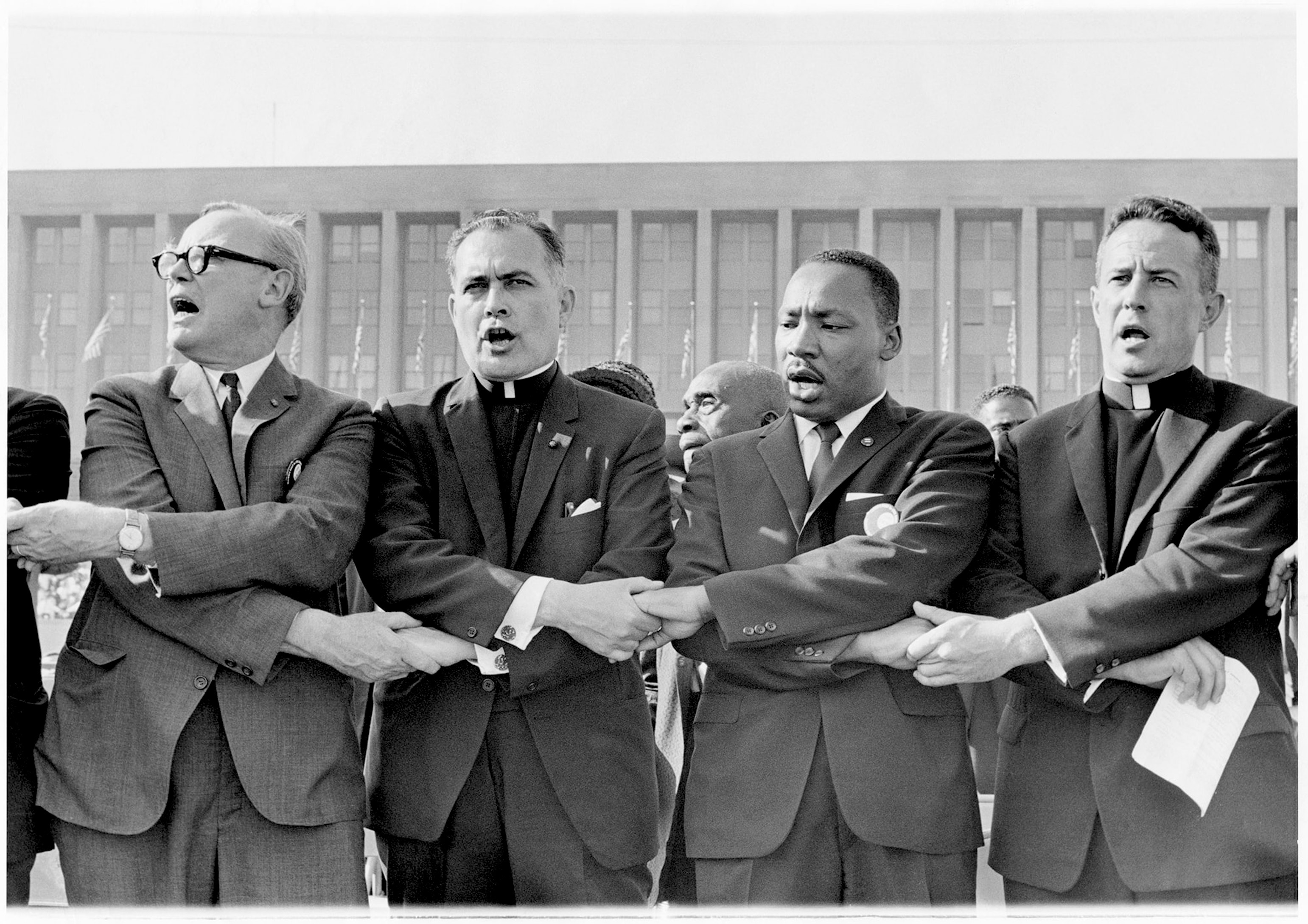
The 1966 coalition campaign of the SCLC and Chicago's CCCO that brought the Southern civil-rights movement north: tenant organizing, open-housing marches, and the Summit Agreement with the Daley administration.
| At a glance | |
|---|---|
| Type | EVENT - campaign |
| Dates | January 1966 - 1967 |
| Chicago connection | CORE |
| Known for | The open-housing marches of summer 1966 and the August 26, 1966 Summit Agreement |
| Verification | VERIFIED |
| CTL ID | CTL-ENC-000418 |
| Documented address | 1550 S. Hamlin Ave., Chicago, IL 60623 |
Overview
The Chicago Freedom Movement was a formal coalition: the Southern Christian Leadership Conference, invited north by Chicago's Coordinating Council of Community Organizations, joined with the CCCO in late 1965, with King and CCCO convener Al Raby as co-chairs and the SCLC's James Bevel as Chicago project director [S1][S3] (see James Bevel). The CCCO brought the local record - the 1963 and 1965 school boycotts against Superintendent Benjamin Willis's segregation, the fight against the Daley administration's urban-renewal displacements - and the SCLC brought the nonviolent campaign method and King himself [S3][S4]. On January 7, 1966, the movement announced its program: end the slums, and make Chicago an open city [S1].
On January 26, King moved into 1550 South Hamlin Avenue in North Lawndale (see Martin Luther King Jr.), and the movement spent the spring on the unglamorous work the cameras skipped: documenting slum conditions building by building, organizing tenant unions in Lawndale, pressing landlords and the courts, and running rent-withholding actions that put movement lawyers in housing court week after week [S1][S4].
Action summer
On July 10, 1966 - Freedom Sunday - tens of thousands rallied at Soldier Field, and King led the crowd to City Hall and posted the movement's demands on the door of Mayor Richard J. Daley's office: open housing, jobs, schools, police accountability, an end to slum conditions [S1][S3]. When summit talks with the administration stalled, the movement took the demand to the sellers: marches into all-white neighborhoods and suburbs, testing the real-estate color line at the point of sale [S1].
The marches met organized white violence. In Gage Park and Chicago Lawn, crowds in the thousands threw bottles, bricks, and cherry bombs at lines of nonviolent marchers protected thinly by police; on August 5, at Marquette Park, a rock struck King in the head [S1][S2]. King's verdict on Chicago's mobs is among the most quoted lines of the movement: he said he had never seen such hate, not in Mississippi or Alabama [S2][S3]. A threatened march into Cicero - the town whose 1951 riot is at Cicero Riot of 1951 - raised the stakes to the point that the administration came to the table in earnest [S1][S4].
The summit and the stand-down
On August 26, 1966, at the Palmer House, the parties signed what was instantly called the Summit Agreement: the Chicago Real Estate Board pledged to support open occupancy and to post the state fair-housing statement, the Mortgage Bankers Association pledged nondiscriminatory lending, the city pledged public-housing and code-enforcement steps, and the movement suspended the marches - including the Cicero march, which became a small, negotiated prayer vigil instead [S1][S3] (the text is treated at Summit Agreement of 1966). King called it the most significant program ever conceived to make open housing real in a metropolitan area; enforcement disputes began almost immediately and are carried, as disputes, in the Summit entry [S1][S4].
The movement wound down through 1967: Jesse Jackson's Operation Breadbasket, begun under the SCLC umbrella in Chicago that February, became the campaign's surviving institution (see Operation Breadbasket), and King turned toward the Poor People's Campaign [S1][S3].
Assessment
The Chicago Freedom Movement is conventionally scored a defeat that taught a lesson, and both halves need their evidence. The Agreement's open-occupancy pledges were weakly enforced; Chicago's segregation, measured by any index, deepened for a generation after 1966 [S3][S4]. Against that: the movement put housing - the North's segregation, maintained by realtors, bankers, and city hall rather than by statute - at the center of the national civil-rights agenda, and the line from the 1966 marches to the Fair Housing Act of April 1968, signed a week after King's assassination, is drawn by the Act's own legislative historians (see Fair Housing Act of 1968) [S1][S3]. It also left Chicago an institutional residue - Breadbasket, the tenant-organizing tradition, and a generation of organizers trained in the campaign - that the city's later movements inherited [S4].
The coalition's machinery
The Freedom Movement's Chicago half had a decade of its own history before King arrived. The CCCO had been built from the 1963 school fight - when some 225,000 students stayed home on October 22, 1963, in the Freedom Day boycott against Willis's mobile classrooms (see Chicago School Boycott of 1963) - and Al Raby, a Chicago schoolteacher, ran it as a federation of dozens of member organizations [S3][S4]. The movement's structure honored that history: King and Raby co-chaired, Bevel directed the project, and the campaign's issues - schools, jobs, housing, police - were voted by the coalition, not dictated from Atlanta [S1][S3]. That structure is why the campaign's record is a Chicago record: when the SCLC's attention turned, in 1967, to the Poor People's Campaign, the CCCO and its member groups remained, and Operation Breadbasket - launched under the SCLC umbrella in February 1966 with Jesse Jackson at its head - was chartered as a Chicago institution from birth [S3][S4].
The campaign's day-to-day work in Lawndale deserves its own paragraph because the cameras missed it. Movement staff organized building-by-building tenant unions, documented code violations with the tenants who lived them, escorted rent-withholding families through housing court, and turned the Hamlin Avenue flat into an open office where North Lawndale residents brought complaints the city had ignored for decades [S1][S4]. The marches were the argument's punctuation; the tenant unions were its text.
What the campaign changed in Chicago's own record
The Freedom Movement also redrew the evidentiary map of Chicago segregation for everyone who came after. Before 1966, the city's housing order was defended in the language of preference and market; the campaign's documentation - the posted demands, the realtors' own statements to marchers and reporters, the violence at the point of sale - made the mechanisms quotable, and the Summit's text made the city's commitments quotable against it [S1][S3]. The Gautreaux plaintiffs filed their housing case in the movement's own month on evidence of the same system (see Gautreaux v. Chicago Housing Authority), and the fair-housing testers of the 1970s worked a beat the marches had opened [S3][S4].
Chicago's Black political generation of the 1970s and 1980s - the organizers and officials who built toward Harold Washington's 1983 election - counted Freedom Movement veterans through its ranks: Breadbasket's staff, the CCCO's member organizations, the Lawndale tenant unions' leaders [S4]. The line is one of personnel and training rather than of program, and the entry states it at that strength: the campaign that failed to open Chicago's housing trained the Chicago that would, within a generation, elect its first Black mayor on a coalition the 1966 organizers would have recognized [S3][S4].
The campaign's failures are part of the same record and are not softened here. The movement never built the membership organization in the Black community that its Chicago partners' earlier boycotts had commanded; its demands outran its machinery; the summit divided its leadership in public; and the neighborhoods it marched through remained, for Black families, effectively closed for decades - a fact measurable in every subsequent census of the Southwest Side [S3][S4]. King left Chicago believing the northern campaign had exposed a problem deeper than the South's statutes, and said so; the Poor People's Campaign of 1968, his answer, was the Chicago lesson generalized [S1]. The entry's judgment, for the gate's sake, is that both the achievement and the failure are the document's contents - the Freedom Movement is the rare campaign whose own paper lets a reader hold the two together, which is why this cohort anchors so many of its entries to it.
A final evidentiary note. The campaign is unusually well filmed and photographed for a movement of its decade - network cameras followed the marches precisely because Chicago was the story of the northern turn - and the visual record, held by the Chicago History Museum and the networks' archives, corroborates the paper record at the points where memory usually blurs: crowd sizes, police lines, the rock at Marquette Park [S2][S3]. Where the images and the paper disagree, this entry follows the paper and says so in the Summit entry's dispute table.
The document of record
The movement's documentary residue is the Summit Agreement of August 26, 1966 - treated as an entry at Summit Agreement of 1966 - together with the movement's posted demands of July 10, 1966, its tenant-union and housing-court files, and the SCLC/CCCO records preserved in the King Papers and Chicago repositories [S1][S3]. The entry is anchored on that residue deliberately: the Freedom Movement is the rare campaign whose own paper - demands, agreement, compliance correspondence - survives well enough to argue from, and the compliance argument in the Summit entry is conducted from it.
Chicago connection
The connection is CORE and total: a Chicago coalition, a Chicago campaign, Chicago neighborhoods as its terrain, the Chicago mayor as its negotiating counterparty, and a Chicago-signed agreement as its document of record [S1][S3]. The SCLC was Atlanta's; the Freedom Movement was Chicago's.
Documented address and map
Documented address: 1550 S. Hamlin Ave., Chicago, IL 60623 - the movement's North Lawndale residence-headquarters, where King lived during the campaign (King Institute). Coordinates are the U.S. Census Geocoder match, recorded verbatim in the frontmatter; the map marks the campaign's documented base, not its many march routes.
Disputed and unresolved
| Claim | Version A (source) | Version B (source) | CTL position |
|---|---|---|---|
| Summit compliance | The movement's critics and later CCCO figures: the city and the Real Estate Board did not perform, and the Agreement was a device to stop the marches | The Daley administration and the Real Estate Board: the pledges were kept in the form made, and open-occupancy statements were posted as agreed | DISPUTED - treated in full at CTL-ENC-000419; CTL asserts only the text and the suspension of the marches, which both sides confirm |
| Freedom Sunday crowd | Some 30,000-60,000 across press and movement accounts | Lower police estimates in some reports | CTL carries the range as a range |
See also
- Martin Luther King Jr.
- Summit Agreement of 1966
- James Bevel
- Fair Housing Act of 1968
- Operation Breadbasket
Relationships
- held_at — City of Chicago (CTL-E-1475) — The Chicago Freedom Movement's campaign - rallies, tenant organizing, and open-housing marches - took place across Chicago in 1966 (King Institute; Chicago History Museum).
- related_to — Martin Luther King Jr. (CTL-E-0342) — King led the movement jointly with Al Raby and the CCCO, and lived in North Lawndale as its most visible resident (King Institute).
- related_to — Chicago Defender (CTL-E-0266) — The Defender covered the campaign as Chicago's principal Black newspaper and documented the marches and the summit for its national readership (Chicago History Museum).
Sources
- S1: The Martin Luther King, Jr. Research and Education Institute, Stanford University. "Chicago Campaign" (Encyclopedia of Martin Luther King, Jr.). https://kinginstitute.stanford.edu/
- S2: Encyclopaedia Britannica. "Martin Luther King, Jr." - Chicago campaign sections. https://www.britannica.com/biography/Martin-Luther-King-Jr
- S3: Chicago History Museum. "Freedom Movement" resources; Encyclopedia of Chicago, "Civil Rights Movement." http://www.encyclopedia.chicagohistory.org/
- S4: James R. Ralph Jr. Northern Protest: Martin Luther King, Jr., Chicago, and the Civil Rights Movement. Cambridge: Harvard University Press, 1993.
Cite this entry
- Permanent ID: CTL-ENC-000418 · Crosswalked graph record: CTL-E-0348 · Version: 0.1 · Date: 2026-10-29
- Chicago: CultureTechLens. "Chicago Freedom Movement." CultureTechLens Encyclopedia, version 0.1, October 29, 2026. CultureTechLens NFP. CTL-ENC-000418. Source: CultureTechLens
- APA: CultureTechLens. (2026). Chicago Freedom Movement (Version 0.1, Entry CTL-ENC-000418). CultureTechLens Encyclopedia. CultureTechLens NFP. Source: CultureTechLens
- MLA: CultureTechLens. "Chicago Freedom Movement." CultureTechLens Encyclopedia, version 0.1, CultureTechLens NFP, 29 Oct. 2026. Entry CTL-ENC-000418. Source: CultureTechLens
Further reading
- James R. Ralph Jr., Northern Protest (Harvard University Press, 1993); Mary Lou Finley et al., eds., The Chicago Freedom Movement (University Press of Kentucky, 2016).
Image credits
- Martin Luther King Jr: see Images block in the frontmatter for the full credit line, rights status, and rights document.
Citation
CultureTechLens. "Chicago Freedom Movement." CultureTechLens Encyclopedia, Historical Documents (staged), version 0.1, 2026-10-29. CultureTechLens NFP. CTL-ENC-000418.