 CULTURETECHLENS
The Encyclopedia · CTL-ENC-000280
Alexander Thomas Augusta
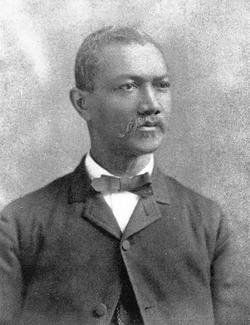
Toronto-trained surgeon who in 1863 became the first Black surgeon commissioned in the U.S. Army, rose to lieutenant colonel — the highest-ranking Black officer of the Civil War era — headed Freedmen's Hospital, and became the first Black professor of medicine in the United States, at Howard.
| At a glance | |
|---|---|
| Type | PERSON — physician |
| Dates | 1825-03-08 – 1890-12-21 |
| Chicago connection | SIGNIFICANT — national significance; no Chicago anchor documented, none invented |
| Known for | First Black surgeon commissioned in the U.S. Army (major, 1863); brevet lieutenant colonel, 1865; first Black head of a U.S. hospital and first Black professor of medicine (Howard) |
| Verification | SUPPORTED |
| CTL ID | CTL-ENC-000280 |
| Documented address | None documented in the sources consulted |
Overview
Alexander Thomas Augusta (March 8, 1825 – December 21, 1890) was an American surgeon and educator. BlackPast summarizes his record in three firsts, each of which the sources below support: he was the highest-ranking Black officer in the Union Army during the Civil War, the first African American head of a hospital (Freedmen's Hospital), and the first Black professor of medicine, at Howard University in Washington, D.C. [S1]. Born in Norfolk, Virginia, to free African American parents, he moved to Baltimore as a youth to work as a barber while pursuing medical study; the University of Pennsylvania would not accept him, though a faculty member taught him privately [S1]. By 1850 he had moved to Toronto, where the medical college of the University of Toronto — Trinity Medical College in the Registry's account — awarded him the Bachelor of Medicine in 1856 [S1][S3]. He was appointed head of Toronto City Hospital and built a successful practice treating Black and white patients [S1][S2].
The Army commission
On January 7, 1863, days after the Emancipation Proclamation authorized Black enlistment, Augusta wrote to President Lincoln requesting appointment as physician to the new colored regiments [S2]. On April 14, 1863, he was commissioned a major in the Union Army — the first African American commissioned as a medical officer, and one of only a small number of Black surgeons to serve — and appointed head surgeon of the 7th U.S. Colored Infantry [S1][S2]. His pay was initially set at seven dollars a month, the rate for a Black enlisted laborer rather than a commissioned officer; he wrote to Senator Henry Wilson of Massachusetts, who had the pay corrected to his rank [S1][S3]. He was mobbed in Baltimore for wearing his officer's uniform in public, and when his white assistant surgeons protested serving under a Black officer, President Lincoln placed him in charge of Freedmen's Hospital at Camp Barker in Washington [S1]. In March 1865 he was promoted to lieutenant colonel — at that time the highest-ranking Black officer in the U.S. military [S1][S2][S3].
Howard and the long fight
Mustering out in 1866, Augusta worked for the Freedmen's Bureau and joined the founding faculty of Howard University's medical department in 1868, becoming the first Black professor at an American medical school [S1][S2]. Barred with other Black physicians from the District's medical society, he fought the exclusion to Congress and, on January 15, 1870, co-founded the National Medical Society of the District of Columbia, which accepted Black and white members [S2]. He practiced in Washington for the rest of his life and on his death in 1890 became the first Black officer buried at Arlington National Cemetery [S2].
Connection
This entry is classed SIGNIFICANT. Its subject has no documented Chicago anchor, and none is invented: the connection to this Chicago-centered encyclopedia is the national one stated in the body — the institutions, schools, and associations these entries document trained, credentialed, organized, and wrote the history of the Black physicians who built Chicago's own Black medical world, from Provident Hospital's staff lines to the National Medical Association's Chicago leadership. William A. Hinton (CTL-ENC-000285) is the batch's exception in the other direction: Chicago-born, Boston-made.
Documented address and map
No address documented in the sources consulted — no coordinates are recorded and no map is published for this entry.
See also
Relationships
- affiliated_with — Howard University College of Medicine — Augusta was a founding faculty member of Howard's medical department and its first Black professor of medicine (BlackPast; U of T).
Sources
- S1: "Alexander T. Augusta (1825–1890)." BlackPast.org. https://blackpast.org/african-american-history/augusta-alexander-t-1825-1890/.
- S2: University of Toronto Alumni. "Doctor of Courage: Alexander Augusta, One of U of T's First Black Medical Students." https://alumni.utoronto.ca/news/doctor-courage-alexander-augusta-one-u-ts-first-black-medical-students.
- S3: African American Registry. "Alexander Augusta, Doctor Born." https://aaregistry.org/story/alexander-augusta-a-pioneering-doctor/.
Cite this entry
- Chicago: CultureTechLens. "Alexander Thomas Augusta." CultureTechLens Encyclopedia, Black Medicine (staged), version 0.1, October 29, 2026. CultureTechLens NFP. CTL-ENC-000280. Source: CultureTechLens
- APA: CultureTechLens. (2026). Alexander Thomas Augusta (Version 0.1, Entry CTL-ENC-000280). CultureTechLens Encyclopedia. CultureTechLens NFP. Source: CultureTechLens
- MLA: CultureTechLens. "Alexander Thomas Augusta." CultureTechLens Encyclopedia, version 0.1, CultureTechLens NFP, 29 Oct. 2026. Entry CTL-ENC-000280. Source: CultureTechLens
Further reading
- See Sources; institutional histories named there are the entry points for deeper reading.
Image credits
- See the Images block in the frontmatter for the full credit line, rights status, and rights document.
<!-- =======================