 CULTURETECHLENS
Madison Street commercial corridor
STAGED RECORD — this record is staged and has not been merged into the canonical CultureTechLens Knowledge Graph. It is preserved as intake backlog for the graph’s enrichment program; the STAGED label replaces any evidence grade until the record is graded into the canonical store.
PROVISIONAL evidence grade of this record
The West Side's Black commercial spine (East Garfield Park/Austin/North Lawndale). Through the 1960s dominated by white property owners and white-owned businesses picketed by civil-rights activists for discriminatory hiring (pending re-verification); after the April 1968 assassination of Martin Luther King Jr., the April 5–7 uprising destroyed ~200 buildings along a 28-block stretch of West Madison Street. Rebuilding programs failed (ProPublica 'Disinvested,' 2020). Named Black-owned firms of the corridor are a documented gap.
Answer summary · this record in brief, from its own record text
The West Side's Black commercial spine (East Garfield Park/Austin/North Lawndale). Through the 1960s dominated by white property owners and white-owned businesses picketed by civil-rights activists for discriminatory hiring (pending re-verification); after the April 1968 assassination of Martin Luther King Jr., the April 5–7 uprising destroyed ~200 buildings along a 28-block stretch of West Madison Street. Rebuilding programs failed (ProPublica 'Disinvested,' 2020). Named Black-owned firms of the corridor are a documented gap.
Notes
RELP98 (2026-10-06): enriched in place; 10 claims + 10 evidence; picketing detail marked Provisional; Black-owned firms gap marked Unresolved. Prior notes: Merged into canonical KG 2026-10-03 from ECON-001; source entity IDs: CTL-DR-ECON-001:ECON-042.
Relationships
- Fair Housing Act of 1968 — impacted by
Government redlining and 'second ghetto' policy shaped the West Side corridor whose commercial life the 1968 unrest gutted (Chicago Magazine).
Referenced by
- 1968 Chicago West Side uprising — held at → this record
Sources
- Solutions Journalism StoryTracker - ProPublica 'Disinvested' (2020-11-11)
- Wikipedia - 1968 Chicago riots
- Columbia Journalism Review - 'Fifty years after Chicago riot, new photos emerge' (2018)
- WTTW Chicago Stories - 'When the West Side Burned' (2024)
- Chicago Magazine - 'Martin Luther King in Chicago: Somebody Nobody Sent' (2012-01)
More neighborhood records
- State Street / South Parkway Black business corridor
- The Loop
- Rogers Park
- Lincoln Park
- Pilsen
- 18th & Vine District (Kansas City)
Browse the full directory: all entity records
Record CTL-E-1367 · CultureTechLens Knowledge Graph · evidence grade: PROVISIONAL · 5 sources · 2 mapped relationships · CTL research: ECON-001, RELP-001.
Directory: all entity records · the knowledge graph
Cite this record
Chicago: CultureTechLens. “Madison Street commercial corridor (CTL-E-1367).” CultureTechLens Knowledge Graph. Chicago, IL: CultureTechLens, 2026. https://culturetechlens.com/graph/entities/ctl-e-1367/
APA: CultureTechLens. (2026). Madison Street commercial corridor (CTL-E-1367) [Entity record]. CultureTechLens Knowledge Graph. https://culturetechlens.com/graph/entities/ctl-e-1367/
MLA: CultureTechLens. “Madison Street commercial corridor (CTL-E-1367).” CultureTechLens Knowledge Graph, 2026, https://culturetechlens.com/graph/entities/ctl-e-1367/
Citation guidance for teachers, journalists, and funders: How to Cite Us.
From the Archive
The archive in pictures
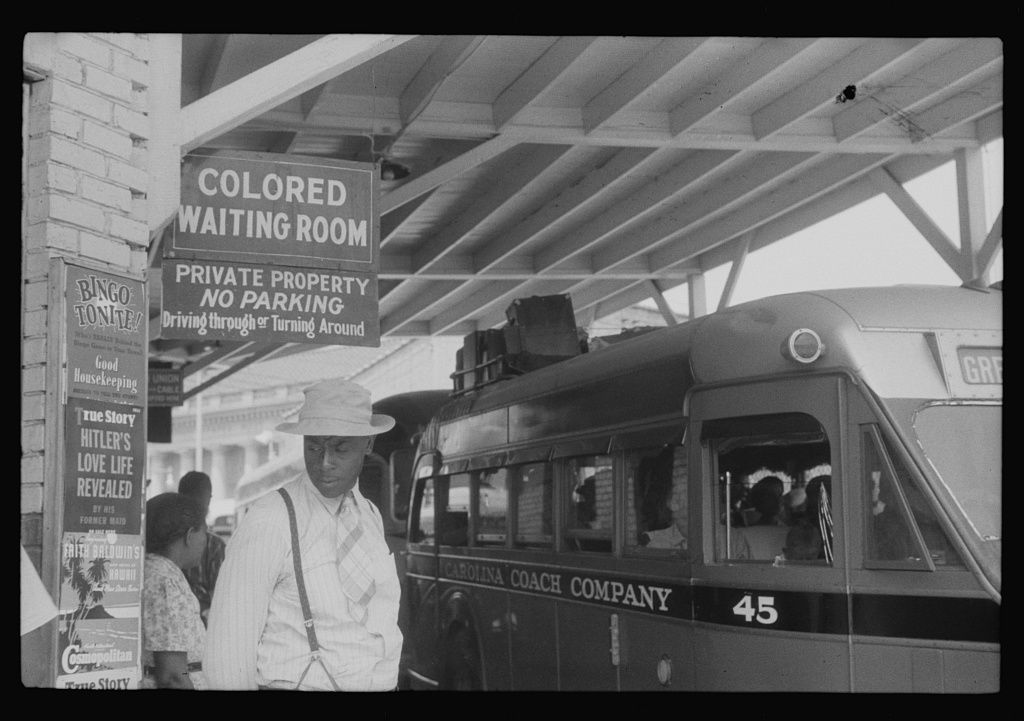
The roads out, the roads back, and the ground in between. Photographs from the CultureTechLens research record — rights-cleared, credited, and cited like everything else here.
Trust & evidence
Evidence before authority. CultureTechLens publishes its methods, its limits, and its corrections alongside its findings. Claims carry grades — STAGED, SUPPORTED, PROVISIONAL, DISPUTED, UNRESOLVED — and unknowns are never reported as zero.
Every claim graded. Every source named. Every correction public — see the corrections log.